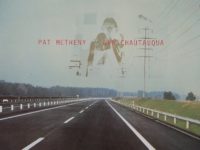
Ever since forming his Pat Metheny Group in 1977, the celebrated jazz guitarist has released records under the band’s name or as something else. Those other records have covered a lot of ground over the years, because they afford Metheny the freedom to break outside the group’s aesthetic and delve into other styles or approaches that he’s interested in. He also gets to play with others – or, for a couple of occasions, play with no one else at all.
Metheny saw such opportunity to break out of that mode in late 1983 and made Rejoicing during a hiatus between the Pat Metheny Group’s Offramp and First Circle albums, a one-off diversion leading a trio with Charlie Haden and Billy Higgins.
This isn’t an Ornette Coleman tribute album, but the avant-jazz godfather does loom large on Rejoicing. Pat Metheny enlisted the bassist and drummer from Coleman’s groundbreaking late ’50s/early ’60s quartet, and he also covered three of Coleman’s songs from the Atlantic Records era and slightly before – including the title cut. In hindsight, this anticipated Metheny’s direct collaboration with his hero on Song X three years later.
In making Rejoicing, however, Metheny didn’t restrict himself by adhering to some narrow ground rules on what to play and how to play them. His treatment of the Ornette Coleman songs “Tears Inside,” “Humpty Dumpty” and “Rejoicing” are given treatments that tilt a little closer to bop than even the originator himself had handled them. That provides the opportunity for Metheny to show off his bebop chops, which are crazy good – especially on “Tears Inside”.
Beyond those three songs are performances that don’t follow much of a pattern. Even the “Lonely Woman” covered here is the Horace Silver version, not Coleman’s, and Metheny electing to play acoustic guitar on it proves to be an inspired decision: His sensitive balladry prowess comes out fully on the unplugged instrument, wisely letting the beautiful melody do the talking.
The record is back-loaded with fresh tunes that Pat Metheny brought to the sessions and are also the spots where he elected to play his guitar synthesizer, signaling for the first time Metheny wasn’t going to limit his use of it within the Pat Metheny Group. Nevertheless, “Story From a Stranger,” also featuring multiple acoustic guitars, would have been right at home on a record with his regular band. The wandering “The Calling” serves explicitly as a vehicle for the then new-fangled guitar, almost like “Offramp” (the song) in slow motion.
So sure, Rejoicing is a bit of a hodgepodge and probably won’t rank at the top of anyone’s list of Metheny’s best albums, but so what? Pat Metheny getting out his non-group ya-ya’s by jamming with a legendary rhythm section was destined to make a good record. It’s held up exceptionally well and is an unjustly overlooked entry in Pat Metheny’s seminal ECM Records catalog.

- Trio Imagination (David Virelles, Reggie Workman, Andrew Cyrille) – ‘Creative Inspirations’ (2026) - October 26, 2026
- The Orchestral Side of Satoko Fujii: Something Else! Interview, Part 2 of 2 - October 23, 2026
- The Orchestral Side of Satoko Fujii: Something Else! Interview, Part 1 of 2 - October 22, 2026