Progressive rock ain’t what it used to be. Whatever that was. That’s not a criticism, just an observation.
As evidence, two reissues have arrived – one by genre stalwart Yes, another by its onetime keyboardist Oliver Wakeman – along with a brand-new effort whose genesis dates back years.
If there’s any band that defined progressive rock, it was Yes, from sidelong epics to radio hits. Full of sweeping synthesizers, fey vocals and thunderous bass – and don’t forget the capes – the band swept to stardom in the ’70s, then remerged in the ’80s. “Roundabout,” “Starship Trooper,” “Close to the Edge” and the four suites of Tales From Topographic Oceans enthralled and bewildered listeners in equal measure.
Dizzying personnel changes led to the drama of synthy pop band the Buggles joining the band, before it came apart at the seams. After dissolving, Yes regrouped around guitarist Trevor Rabin and hit the pop charts with “Owner of a Lonely Heart,” and subsequently toured as a five-, six- and behemoth eight-piece. On and on and on it went, with personnel losses, reappearances and the occasional recording. After Rick Wakeman left for the umpteenth time, the band hired Wakeman again – only it turned out to be his son Oliver. (The lack of a cape should have been a giveaway.)
Yes, ‘From a Page: Expanded Edition’
Oliver Wakeman was dismissed when Yes brought back Geoff Downes, but he had already been writing with various band members. Wakeman approached them some years after his departure about releasing some of the music that had been recorded before his dismissal. The result was 2019’s mini-album From a Page.
Now, the remastered reissue he oversaw includes that EP, along with alternate takes and demos of songs written during those sessions, some of which appeared on Yes’ subsequent album Fly From Here. The songs hold up against anything the band named Yes has released in the last quarter century. One interesting inclusion is “Aliens,” which appeared on the 2012 Squackett album A Life Within a Day by Chris Squire and Steve Hackett.
This version of From a Page demonstrates a few things. One is that replacing lead vocalist Benoit David was not a bad idea. Where he and current vocalist Jon Davison both share a vocal range with the iconic Jon Anderson, David’s voice comes across here as thinner than either Jon. Not bad per se, but lacking the strength Anderson’s voice in particular demonstrated despite his singing in the stratosphere. That was also evident on Fly From Here – Return Trip, in which David’s vocals were replaced by those of producer and former lead vocalist Trevor Horn.
One thing there is absolutely no issue with is the sound quality. It’s pristine and boasts depth. Oliver Wakeman’s keyboards are treated especially kindly, while Chris Squire’s thunderous bass is held in check rather than overpowering things, as it frequently did in concert during his last years with the band. Wakeman’s rippling piano and Steve Howe’s guitar on “Hour of Need” are lovely, while the synth stylings of the alternate version of “Words On a Page” are especially enjoyable.
PURCHASE: Yes, ‘From a Page: Expanded Edition’
Oliver Wakeman, ‘Mother’s Ruin: 20th Anniversary Edition’
The reissue of Oliver Wakeman’s own Mother’s Ruin further demonstrates his keyboard mastery. It’s perhaps less prog and more traditional rock, with an extra dollop of synthesizer. “Wall of Water,” for example, features various sonic textures, including telephone effects. Many of the songs feature duels or alternating keyboard/guitar solos, the latter courtesy David Mark Pearce. Bassist Tim Buchanan’s nimble work keeps things moving along. Vocalist Moon Kinnaird clearly was influenced by ’80s metal.
This reissue also includes some additional and alternate tracks. Paul Manzi, who ended up touring with the band following its original release, sings on some songs, including the moody “Busy Going Nowhere.” It’s one of the standout tracks, featuring Wakeman’s piano.
Damian Wilson, who had originally helped with demos, sings on the new version of “Calling For You.” His version is even more metallic than the original by Kinnaird. Manzi also redoes the title track, and his voice is just more user-friendly than either of the others.
PURCHASE: Oliver Wakeman, ‘Mother’s Ruin: 20th Anniversary Edition’
Steve Hackett and Steve Rothery, ‘The Roaring Waves’
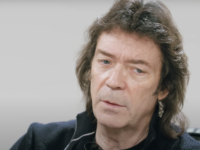
Then we’ve got something old, something new, yet still kind of old. That’s because The Roaring Waves started its development over a decade ago, as old friends Steve Hackett and Steve Rothery began discussing recording together back in 2015. Initial work on the music itself dates to 2018 before the pair started writing and playing in earnest in 2023. With touring schedules and other commitments, the final product didn’t appear until now.
Hackett continues to tour with his own music and that of his onetime band, while Rothery’s band Marillion was at times accused of aping the sounds and stylings of Genesis (not without some merit). But their instrumental studio album The Roaring Waves is perhaps not what fans of either of those bands might expect.
Here the emphasis is on texture and depth, and the sound is overall darker than Genesis, Marillion, or most of Hackett’s solo efforts. It’s all instrumental, with Hackett on guitars, sitar guitar and harmonica, Rothery on guitars, bass guitar and keyboards, Riccardo Romano playing keyboards and bass guitar, and drums from Daniele Pomo and Leon Parr.
The two axe-wielders spur one another on. At times, you can tell which guitarist is which – Hackett’s tone is often unmistakable, as are his swirling whammy bar effects, while Rothery’s bluesy approach is all his own. But it’s not about trying to determine who’s playing who, and certainly not who is out-shredding who. “I suspect that most guitarists tend to make albums where people try to outplay each other and show their chops to an enormous degree,” Hackett argues. “If you’re expecting something typically proggy, I don’t think this is it. It’s more cinematic, almost ambient at times.”
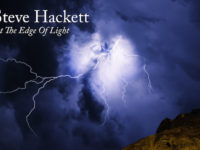
Rothery is succinct: “You’re trying to create an atmosphere,” he says. Indeed, atmosphere abounds. The evocative titles – “The Storm,” “Red Dragon,” “The Black Sea” conjure up images before you hear a note, and the notes you do hear seem to reflect those titles. For example, the opening “Storm” slowly builds, as a storm coming across the horizon, with the ominous backgrounds portending the thunder to come.
As Hackett says, it’s not all prog and it’s not all scary ambient. Hackett employs his harmonica on “Pacific Coast Highway,” which gives the Americana-esque track a bluesy feel. That’s furthered by the collective background voices by the two guitarists and members of their families. Hackett describes the casual vocal harmonies and spoken sounds as creating a warm, human “musical sunset.” Hi ho, Silver!
It’s certainly not “Watcher of the Skies” or “Supper’s Ready,” nor really much like any of Hackett’s recent solo material, though you can hear some precedent in tracks like “Vampire With a Healthy Appetite.” On Rothery’s side, there’s nothing of “Kayleigh” here, nor much from more recent Marillionisms either.
What there is is two of music’s finest guitarists playing imaginative music together. It’s an album that possesses such depth that repeated listening reveal nuances and mini-melodies you don’t hear at first. It’s richly rewarding.
PURCHASE: Steve Hackett and Steve Rothery, ‘The Roaring Waves’
- New in Jazz: Ali Ryerson Quartet, Rich Willey, Janis Siegel, Stickman + Schapiro 17 - September 10, 2026
- Steve Hackett, Steve Rothery and Oliver Wakeman: Classic Prog Continues Stretching - August 19, 2026
- Herb Alpert, Brad Paisley, Eric Benet + Others: 2025’s Seasonal Sounds - December 23, 2025