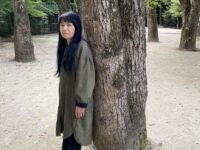
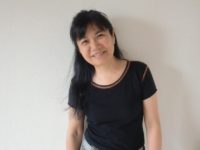
The most adventurous, audacious composer and conductor of big band jazz in the twenty-first century is back with a vengeance after a worldwide pandemic curtailed activities in that arena for a number of years. Satoko Fujii is in the midst of releasing a stunning five sets of recordings, each of which features her leading five distinct orchestras in five distinct cities. I recently sat down for a talk with Fujii to find out how these ambitious projects came together, how she got to become the “Duke Ellington of avant-garde jazz” and who has inspired her along the way. The first of this two-part interview is presented below:
S. Victor Aaron: You’ve had such a long and multifaceted career, there are so many interesting aspects of it, but today, we want to focus on just one of them, and that’s your orchestral works. Which is timely, because in this year of 2026, you’re in the process of putting out five whole orchestral records, a staggering amount from five distinct orchestras. So, can you tell me what, was the catalyst for this sudden burst of activity with your orchestras?
Satoko Fujii: I had been working with my big bands for a long time. After the pandemic, I, of course, made some concerts with Orchestra Tokyo, Nagoya, Kobe (in native Japan), but not in New York City, nor in Germany at all. During the pandemic, all my (foreign) projects were stopped. So, I just put big band Projects and larger ensembles aside. I didn’t know where I can start again.
There is a friend of mine who is a German producer and concert producer, Wolfgang Gross. He came across a tape was in his living room and, he listened to it, and that was our (Bielefeld, Germany) concert in 2014. And, we all loved it, so we decided to make a CD from out of it (Bunker Ulmenwall Orchestra). Then I started to think maybe it’s good time to, catch up all other larger ensembles. I have a tendency that if I have good idea, I just go for it. I cannot make some relaxed plan. I just go for it, and that’s my way. And I decided, okay, let’s do it.
So fortunately, we could have a concert back in February (2026), in Kobe and Nagoya and record with them. And then, I set up concert in May, in Berlin, to make a CD with them.
In Europe, I had a call from Japan that my father, got stroke. So I had to fly back to Tokyo. He’s now 100 years old, but luckily, he didn’t get any bad effect. I mean, the stroke was very light. So, he stayed in the hospital two weeks, but because he’s old and he got pneumonia but he eventually got out. Then I could fly back to Berlin, to do this (recording). It a very emotional night I got, after all the things happened, and the music, I believe, with all these great musicians.
And in July, I had a concert with my orchestra Tokyo. So, now, all the music are recorded already.
S. Victor Aaron: Tell me how you got started, leading orchestras in the first place, and how did different ones spring up based in different cities around the globe?
Satoko Fujii: I started, actually, my professional career playing in big band, In Japan, I was 24 years old. And before then, I was a classical player. So I could read the music. But (I was) not a great improviser. However, I got a position in a house band, playing piano in big band.
I studied in Boston. I was in the Berklee College of Music, and I studied large ensemble writing with Herb Pomeroy and my graduate recital was with a big band. Then I studied in New England Conservatory and studied with George Russell. So I got much, much information about larger ensembles. Then, I actually started larger ensemble, big band, my big band, in Boston. I moved to New York City after my graduation and then I started my Orchestra New York and recorded with them.
Then I had to move back to Tokyo because of a visa issue and started my Tokyo Orchestra Tokyo. I used pieces for this orchestra that I wrote for Orchestra New York. I just wrote the score, took back the score to Tokyo and played with them, and I found how the music came out differently And it’s not, like, good or bad. It’s just different. We all had different background, different tastes, different culture, we are all different. I was so impressed how we could make music from the same writing. So, I made a CD with both New York Orchestra New York and Orchestra Tokyo, playing same repertoire. I released it as Double Take.
Then, I started writing differently for Orchestra Tokyo, Orchestra New York, then I got some offer from a guitar player in Nagoya. He wanted to make an orchestra. But I didn’t know anyone in Nagoya City, so I asked him if he can get musicians and if he can get a venue to play, I would be happy to bring my charts to play with them.
And, in Kobe, one guy who has a small jazz club called Big Apple emailed me. I said, I would be happy, you know, I love the city, Kobe, I would be happy to be there to make music.
As the larger ensembles grew, and I started writing differently. Then, I moved to Berlin, Germany. I actually took two years to start my large ensemble there because I was very new in the scene, in the city, so finally, I made my orchestra band.
S. Victor Aaron: So how many does that make now? Is it six orchestras that you currently have?
Satoko Fujii: Yes, six orchestras.
S. Victor Aaron: You think there’s going to end up being any more, or is that’s enough?
Satoko Fujii: Well, sometimes, in some cities or some college, university, they offer, if I do some workshops there with, like, students, orchestra. And, so I did it in 2024 in Hamburg, and also in Melbourne, Australia.
S. Victor Aaron: Okay, you touched on something that overlaps with a question I was going to have with you, and that is, you took some pieces that you wrote for the New York Orchestra, and you ended up using for the Tokyo Orchestra, I noticed that for the first of your 2026 orchestra releases, the Bunker Allman Wall Orchestra you did another rendition of your monolith piece, “Shiki.” So you had done that with the New York Orchestra, and then you did it for the Bunker Ulmenwall Orchestra. What I’ve noticed is that the basic direction is the same, or the framework’s the same, but there’s these different plot twists in it. So, my question is, how instrumental was the makeup of the band and the traits of the individual soloists inform the different paths you took here, on this rendition over the original? Did it come out different because of the individuals involved in the orchestra, or the way you conducted it?
Satoko Fujii: I would say both.
S. Victor Aaron: Who are some historical jazz orchestra (big band) leaders you draw inspiration from? I would assume Duke Ellington and obviously George Russell, but are there any others that you’ve taken inspiration from?
Satoko Fujii: There are so many great big bands, of course. There’s a great one that is actually in Paris. I went to a jazz club there and saw a concert of a big band called Grand Lousadzak, and I was so impressed. And, the leader is Claude Tchamitchian, a bass player who is French guy, leading a French big band. If you haven’t heard it, I really recommend it. Great composer, and, very intellectual but at the same time, very exciting. And, they make music by packing into a small package. It’s very exciting; that’s one of the big brands that I love.
And, of course, I love Butch Morris, as well as Henry Threadgill.
S. Victor Aaron: Have you’ve met Threadgill and known him personally?
Satoko Fujii: No, not really. I met him only once or twice, because my bass player in my orchestra in New York, Stomu Takeishi. He played with him. So, yeah, I met him on the street in New York City and talked to him briefly, but that’s it. So, not in person. I went to his concerts many times, but I was too shy to go to backstage.
S. Victor Aaron: Of a parallel you both have, is neither of you are never afraid to introduce unusual instruments in his orchestra, you know? He’s replaced a bass with a tuba, you know, he’s had, like, electric guitars in there. He just likes to experiment with different instrumentations a lot like you do. But, I don’t think I’ve ever heard him conduct as large of an orchestra as you have, but he still seems to get an orchestral sound out of small ensembles. He’s really good at that, I think.
Satoko Fujii: Well, you know, where I lived in New York City in ’97, during that time, he had a larger ensemble, big band. But, no CDs, no albums made with them. But I went to his concert and It sounded so great. Yeah, his concert — all his concerts — always inspired me a lot. He’s an incredible musician.
S. Victor Aaron: I alluded to the guitar. That was one of the things that stands out to me with your orchestra work, in that in some of them, you have not only a guitar, but have it playing, like a rock guitar. I wonder if are you incorporating, some things from like Tatsuya Yoshida of the Ruins, whom you worked with. So, I know you’re tapped into the underground rock and the noise rock of Japan. Is that what you’re bringing? Has that influenced you with your orchestras, where we hear the guitar?
Satoko Fujii: So, for any project of mine, I don’t think about the instrument. If I want to place someone, I don’t care what kind of instruments they play. So, I would say (the rock guitars) happened by accident. I get a guitar player, or, I get a rock musician, whatever; I just want to play with that person.
S. Victor Aaron: Let’s move on to the second of the orchestra releases this year, After the Storm by the Kobe Orchestra. I’ve heard, particularly on this record, when you cue in soloists or groups of soloists, or subgroups sometimes they’re overlapping each other instead of just doing it straight sequentially. Is this a way to try to expand the composition, to get more out of the composition?
Satoko Fujii: Well, I would say that it’s part of my composition. When I make a piece I always think about the sound. And also, at the same time, shape, structure. And so overlapping is my idea.
S. Victor Aaron: When I listen to any piece you do, there’s always at least one surprise in there. It’s like, wow, you zigged when I expected you to zag. Do you end up surprised by the results of the performance yourself?
Satoko Fujii: Yes. You know, I cannot get some surprise thing. I don’t need to play with my orchestra, I just can’t write it. But, you know, always that was the best part. I bring the scores to my bands, and where I play fast I always think, like, “wow, I didn’t know that I wrote this.”
S. Victor Aaron: Do the musicians in your band sometimes take it where you didn’t expect it to go?
Satoko Fujii: Of course, yeah.
S. Victor Aaron: You encourage that, too, don’t you?
Satoko Fujii: Yes, yes. Actually, I love it. I love it. It just takes me to somewhere that I don’t know. I think music is alive. And we always get some accidents that we don’t expect. That’s one of the yummy things in life.
S. Victor Aaron: The next one that came out in September (2026), Second Attempt with your Berlin Orchestra. There, you took a novel approach. Instead of presenting a whole piece, you took bits. Like, small pieces that you would normally use to back up soloists. And use them as building blocks for your musicians to put together as a fully realized composition, basically, right? And I think that turned out well. Is that a one-off thing, or is it that you think that’s something that you might do again?
Satoko Fujii: I think I would like to continue doing that because it’s actually very interesting. It’s both composition and improvised that I can combine, even with the same rhythm, small fragments I can use to make music differently. So, it has a lot of potential, I think.
S. Victor Aaron: Another thing that you did on Second Attempt, you have a piece in there where they were just using sound effects — I know the idea was to use newspapers — but you knew it wasn’t going to come out well in recording. You had them doing sound effects instead, it sounded like the basic idea was the same, that whether it’s sound effects, or banging on an instrument, or just wordless vocalizations. The idea to improvise without using an instrument. Is that a way to get them to just go totally on instinct, rather than something that they formally learned? In other words,, going outside of instruments and making sound without their instrument?
Satoko Fujii: Well, I found out that good musicians can make music even without a musical instrument.
S. Victor Aaron: It’s like your husband (Natsuki Tamura) who can make music out of kitchen implements, right? (laughs)
Satoko Fujii: Yes, yes, we can make music with anything, we can sing, we can hit something, everything. And, so I was very sure that, we could make great science with newspapers. And that’s why I got the idea. But, before newspapers, I originally provided a Chapstick and paper cup. Then I changed to newspapers. That’s because, you know the whole world is getting crazy. For me, it was kind of like — I don’t know what it is in English, I even don’t know what it is in Japanese — but I just wanted to sound an alarm about it.
In Part 2, Fujii discusses the last two of the 2026 batch of big band releases, and projects she has cooking for the near term. Check this space for this interview’s conclusion!

- The Orchestral Side of Satoko Fujii: Something Else! Interview, Part 1 of 2 - October 22, 2026
- Thollem – ‘DoReMiantiFa Symphony’ (2026) - October 14, 2026
- Nick Maclean’s Snaggle feat. the Ali Bros., “Arkady” from ‘Foundation’ (2026): Sneak peek - October 13, 2026