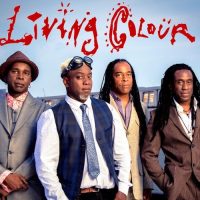
Vernon Reid has always been a restless innovator. As the driving force behind Living Colour, his guitar redefined what Black artistry could sound like in the late ’80s rock mainstream — equal parts metal, funk, jazz, and political urgency.
Reid returns to the solo spotlight with Hoodoo Telemetry, crafting an album that resists easy categorization. Produced with Ivan Julian and recorded in Brooklyn with a shifting cast of collaborators, the record plays like a sonic atlas: a fractured but deeply intentional exploration of history, memory, and the chaos of the present.
The opening track, “Door of No Return,” makes the album’s stakes clear. Reid summons a ritual of remembrance with bassist Steve Jenkins and drummer Donald Sturge Anthony McKenzie II, referencing the brutal legacy of the slave trade. His guitar is both lament and incantation, jagged yet searching, immediately positioning Hoodoo Telemetry as testimony as much as art. That sense of cultural weight threads throughout the record, though Reid rarely stays in one place.
Covers become reinventions. “Freedom Jazz Dance” (with Burnt Sugar the Arkestra Chamber) transforms Eddie Harris’s composition into a collective improvisation featuring horns, voices, and DJ Logic’s turntable textures. At the same time, Cream’s “Politician” is recast as a scathing commentary rather than a swaggering blues-rock track. Vernon Reid also finds poignancy in Edgar Winter’s “Dying to Live,” stripping the song down to guitar, bass and subtle scratches, yielding one of the album’s most vulnerable statements.
The original compositions are no less ambitious. “The Bronx Paradox” pays tribute to hip-hop’s birthplace, blending horns, vocals and DJ Logic’s turntables into a gritty homage that never lapses into nostalgia. “OrKnot” stretches into avant-garde territory with Doug Wimbish on bass and Micah Gaugh’s searing alto saxophone, while “Black Fathom Five” pairs Reid’s jagged electronics with poet BEANS in a dystopian spoken-word soundscape. Tracks like these showcase Reid’s commitment to experimentation—music as confrontation rather than comfort.
Still, Hoodoo Telemetry isn’t all fire and abrasion. “Meditation on the Last Time I Saw Arthur Rhames” offers a moving trio tribute to the late saxophonist-pianist, with Reid’s guitar lines unraveling like memory itself. Even the brief “My Little Zulu Babe” turns playful, reframing a relic of early American popular music with irony and grit. And then there’s the closer, “In Effigy” — a haunting, unusual piece that drifts between calm and chaos, offering no resolution. Instead, it leaves listeners suspended, as if Reid is insisting that questions matter more than answers.
What ties all of this together is Vernon Reid’s guitar. Whether snarling through “Beautiful Bastard” with Deantoni Parks on drums, or dissolving into textures on the more experimental cuts, his playing is restless but purposeful. He has always thrived on tension—between genres, between history and futurism—and Hoodoo Telemetry doubles down on that approach.
If Living Colour’s 1988 breakthrough Vivid was a manifesto of hybrid energy, Hoodoo Telemetry feels like its fractured descendant. It is less linear, more collaged, and more jagged, but no less committed to truth-telling. Reid once described the record as “a piece of [his] all-over-the-place mind,” and that’s precisely what it is: a sonic diary of a world in turmoil, where memory and protest, groove and chaos, coexist in uneasy harmony.
This is not an easy listen, nor is it meant to be. Hoodoo Telemetry is a challenging, urgent work that insists we pay attention — not just to Reid’s dazzling guitar, but to the histories and contradictions it carries. In a time of noise and fracture, Vernon Reid offers not resolution but reflection, reminding us that art’s power lies in its ability to map chaos without pretending to tame it.
Hoodoo Telemetry is yet another significant milestone in the career of a great artist who has had a series of important milestones.

- Ben Rosenblum Nebula Project – ‘The Longest Way Round’ (2026) - April 4, 2026
- Walter Becker, “My Waterloo [Live at Slim’s]” (2026): One Track Mind - March 28, 2026
- Mark Wade Trio – ‘New Stages’ (2026) - March 21, 2026