Diana Krall’s Sweetly Erotic ‘Quiet Nights’ Was Perfectly Named
Released a decade ago today, Diana Krall’s ‘Quiet Nights’ succeeds as easy listening – in the best sense of those words.

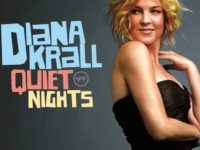
Released a decade ago today, Diana Krall’s ‘Quiet Nights’ succeeds as easy listening – in the best sense of those words.
“Perdido” was supposed to be a live showcase for Charlie Parker. Then Ella Fitzgerald – who would have been 100 today – stepped up to the mic.
Come on a journey with Charlie Parker. Hear the trials, the outtakes and the false starts of some of his most memorable tunes.
Diana Krall is better than these arrangements, better than this album, better than she’s too-often presented — even though those records sell the most.
A lot of Dirty Loops’ covers have been released via YouTube, and the latest one to hit the video circuit is their more organic, more virtuosic rendition of Avicii’s Aloe Blacc-sung “Wake Me Up.”
With a groove so sharp it cuts through the night, “Fire and Brimstone” bears no small amount of resemblance to the fonky-psychedelic rock style of Trombone Shorty’s former employer, Lenny Kravitz. You May Also Like: Trombone Shorty Raced Beyond Genres on Transcendent ‘Backatown’ Trombone Shorty – ‘Lifted’ (2022) Richard Turgeon,Read More
Apparently performing on his addictively watchable web show ‘Live From Daryl’s House’ has had an impact on Daryl Hall.
An underappreciated Dizzy Gillespie record on Verve, includes some s-s-smokin’ thoughts of “Con Alma” — two, in fact. You May Also Like: Dizzy Gillespie and Friends – Concert of the Century: A Tribute to Charlie Parker (2016) ‘Hot House: The Complete Jazz at Massey Hall Recordings’ (2023) Wes Montgomery withRead More
by Nick DeRiso Billie Holiday’s voice, fragile and thin at the end, belied the strong-willed fighter she always was. This record, dotted with tunes she’d once owned two decades before as a bubbly bird in front of big bands, makes the argument for her. By the mid-1950s, the hard-living HolidayRead More
by Pico Ken Burns’ epic PBS documentary on jazz spent nearly all its time on the history up to 1960 and little afterwards. The implication was that jazz stopped becoming revolutionary and more evolutionary after Ornette Coleman ushered in the “new thing” at the beginning of the sixties. Thus, thereRead More