As we watched Ozzy Osbourne’s final performance a couple of weeks ago, who knew that it would be one of the last times we’d see him at all? His sudden passing makes that already special event even more so, and I’m glad the metal world got to celebrate him one last time.
Realistically, we’ve known for a few years that this moment was getting closer, but it still stings. I always thought when the time came that I would have a lot to say, but as much as I love to talk music, I find myself at a bit of an unusual loss for words as I consider the impact that Osbourne’s music had on my life. I’ve been thinking about it since my wife interrupted a work meeting to share the news with me. Even days later, I’m still not really sure how to approach it. So, if I ramble on a bit, my apologies. This is one of the big ones for me.
I was already well entrenched in metal when I discovered Ozzy Osbourne, but I still vividly remember the first time that I heard him. I was at a friend’s house when he popped an unlabeled cassette into his stereo. “War Pigs” blasted out of the speakers, and I thought it was one of the most awesome things ever. We got to that last lyric, “Satan laughing spreads his wings,” and it was, honestly, a life-changing moment for me. I probably looked a lot like Keanu Reeves in Bill and Ted (though we were years from that movie’s release) when I went “whoa,” with eyes wide and mouth hanging open. That final verse was so sinister, so powerful, and then punctuated by Tony Iommi’s simple, yet destructive riff. I couldn’t stop thinking about it for the rest of the afternoon and beyond.
It was a weird time. I lived in the buckle of the Bible belt, and we were also at the beginning of the Satanic Panic in the 1980s. I remember thinking this was just about the coolest thing I’d ever heard, while at the same time wondering if I might be going to Hell just for listening to it. I, of course, got over that feeling.
Once I heard it a couple more times and figured out the lyrics, I realized that despite the talk of witches, black masses, and the devil, that there was really nothing at all evil about it, except perhaps for the war that the song was railing against. The more that I dug into Black Sabbath and Osbourne, the more I realized how silly the satanic brush that people often painted them with was.
I mean, when you look at songs like “After Forever” and “Lord of this World” from Master of Reality, you could argue that they have overtly Christian themes. Not to mention that the first time I heard a live performance from Osbourne, he was yelling “I love you all” and “God bless you all” just about every time there was a break in the music, something he continued right up until his final performance. Hardly the attitude of the satanic high priest a lot of parents and preachers believed him to be at the time.
It’s kind of funny that it took me a little while longer to realize that this Ozzy Osbourne, who a lot of people around me seemed to be scared of and who Tipper Gore and her ilk were demonizing with the PMRC, and the singer of Black Sabbath were one and the same. That’s when I started to get into his solo work.
I’d already developed an interest in guitar by that point, though I hadn’t started playing. But when I heard Randy Rhoads, my desire kicked into high gear. His work on those first two records — great riffs, classical influences, scorching leads — captivated me and continues to do so 40 years later. One of my life’s goals is to finally nail the “Over the Mountain” solo before I’m gone.
Rhoads was already gone by the time that I discovered Osbourne, but over the course of the next decade or so, our favorite rock ‘n’ roll madman introduced me to some mind-blowing guitarists. Though the albums with Jake E. Lee were not my favorites from Osbourne’s catalog, he was an amazing and unique player who gave us one of the greatest riffs of all time in “Bark at the Moon.”
Then, in 1988, I sat in my truck behind the American Legion Hall — before a Boy Scout meeting of all things — with another friend and popped No Rest for the Wicked into my tape deck to hear Zakk Wylde for the first time. I remember thinking, what the hell am I even hearing here? His squeals, chicken-picking, and flash brought a whole new attitude and aggression to Osbourne’s music.
A few years later, in 1991, I remember walking into a local music store on the same day that Guns n’ Roses released the Use Your Illusion albums. People were lining up for them, but Osbourne’s No More Tears released on the same day. When the long-haired kid in the black concert shirt walked through the door, the sales guy immediately pointed at me and said, “Guns ‘n’ Roses, right?” I said, “Hell, no. Ozzy.”
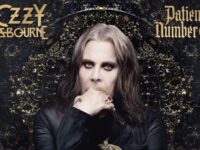
It was absolutely the right call, and I’ll stand by that to this day. After No More Tears, the Prince of (Bleeping) Darkness’ work became a little spotty, though there are still some gems mixed in here and there – including, in my opinion, his final album, Patient Number Nine from 2022.
In the late 1990s and early 2000s, he finally began to shed some of the “evil” image with his reality show The Osbournes on MTV. It’s certainly debatable whether doing the show was a good or bad idea, but it took Osbourne from being a bogey man to a lot of people to more of a beloved crazy grandfatherly figure as he stumbled around, perplexed by his family, mumbling incoherently, and yelling for his wife with the often mimicked “Shaaaron.”
We shouldn’t forget that the man had his demons as well. As fondly as so many of us look at him now, it’s almost miraculous that he reached the age of 76 given the way that he lived in the ’70s and early ’80s. He more than earned his reputation as a madman.
I had hoped after the Back to the Beginning performance a few weeks ago that we might yet hear more music from him. I knew, as well as anyone else who watched, that we’d never see him live again, but the spirit was still there even if the body couldn’t deliver. I’d dared to believe that we might even get one more Sabbath record at some point. But it wasn’t to be.
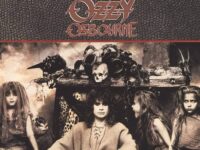
Osbourne leaves behind a legacy that deserves respect not only in the metal world, but in the music world in general. As far as I’m concerned, the first six Black Sabbath albums are un-fucking-touchable. I feel almost as strongly about his first six solo studio records, along with Speak of the Devil and Tribute. In a day and age where legend gets thrown around far too lightly in my opinion, Ozzy Osbourne is an artist that more than deserves it. He will be missed.
The only thing I have left to say is the same thing I said when I wrote about the Back to the Beginning show: Thank you, Ozzy. We’ll see you on the other side.

- How Savatage’s ‘Streets: A Rock Opera’ Provided a Life-Changing Moment - October 4, 2026
- In an Era With So Many ‘Legends,’ Ozzy Osbourne Lived Up to the Title - July 24, 2025
- How Black Sabbath’s Self-Titled Debut Invented a New Genre of Music - February 5, 2025