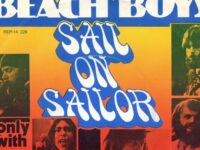
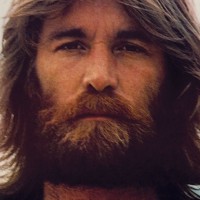
Brian Wilson passed away just eight days before he would have turned 83, leaving behind a towering legacy with the Beach Boys and as a solo artist. He was born only two days after Paul McCartney, so maybe there is something to astrology after all.
After the Beatles, the Beach Boys and Terry Kath-era Chicago were always either No. 2 or No. 3 on my list of musical loves. It often depended on my mood.
My introduction to the Beach Boys was during the summer of 1965, so it’s been some 60 years since I heard “California Girls” for the very first time. It was among the first five records I ever bought with my own money.
I’ve always loved vocal harmonies and nobody was better at creating them than the Beach Boys. At the time, that fun summer single was the most astounding piece of music I had ever heard. I remember it well because it gave me goosebumps.
While very few bands reached the heights the the Beach Boys soared to, even fewer have fallen from the mountaintop as far as they did. Most of their unforgettable accomplishments were, of course, attributable to Brian Wilson. He was so dominant that he didn’t even need the band in order to succeed. The proof is that much of their mythic album, Pet Sounds, lacked involvement by the other group members.
The Beach Boys suffered plenty of internal strife and drugs and health issues were also factors in the band’s decline. But nothing could keep the Beach Boys – and Brian Wilson – from the pantheon of pop music gods.
Of course, there are music lovers who don’t care for the Beach Boys because of the subject matter of their early songs. Surfing, cars, girls on the beach, high school and summertime fun can be considered quite lightweight and silly when stacked up against more serious artists who were making big names for themselves during the same era.
Bob Dylan, Joan Baez, and Peter, Paul and Mary immediately come to mind. By 1965, the Beatles had moved on from “yeah, yeah, yeah” to headier stuff. “In My Life,” “Nowhere Man,” “Help,” “Yesterday” and “Day Tripper” all demonstrated maturity while “California Girls” (despite its sophisticated arrangement) and the bare bones production that is “Barbara Ann” were still catching waves at the top of the charts. Then Pet Sounds appeared in 1966 and greatly elevated the Beach Boys’ artistic profile.
Early on, they’d deftly tapped into American teenage culture. The Beach Boys were loved by those who were part of the Southern California social scene, by kids who couldn’t find a beach or a surfboard within a thousand miles of their homes, and by those who drove 1965 Ramblers (me!) instead of hot rods. Listeners lived vicariously through the Wilson brothers and their bandmates. The Beach Boys became symbols of a Utopian, teenage lifestyle many ’60s, American kids wished for and some believed actually existed. The Beach Boys were the cool kids on the block.
Those very early Brian Wilson compositions with Mike Love compositions are classics but when Wilson finally set loftier goals for them, it was well past time. The Beach Boys couldn’t sing about ocean waves forever, or could they? By the mid-’70s, their best creative years were behind them. They’d became an oldies act due to either commercial considerations or lack of inspiration. In reality, it was probably both.
Their 1985 eponymous album, featuring Brian Wilson’s return, had a song called “California Calling” that had Al Jardine singing the phrase “totally rad.” This from a band whose oldest members were now in their 40s. Think about the contrast. More than a decade earlier John Lennon – who would be approximately the same age as The Beach Boys if he were alive today – gave the world “Imagine.”
Many years ago, a music writer (I wish I could remember who) claimed the Beach Boys were folk musicians because their songs contained a basic element of the genre. Folk music often tells stories about a national or regional culture. It is probably pushing the wall of the genre a bit to consider “Fun, Fun, Fun” and “Don’t Worry, Baby” folk songs, but I get the author’s point.
For me, it was always about the band’s harmonies and melodies. Sometimes I didn’t even care about their lyrics. I just wanted to hear the guys sing. Many abundantly talented vocalists have followed who can harmonize quite well, but no one has ever been able to do it as magnificently as later member Bruce Johnston and his five more famous friends from Hawthorne, California.
I’ve heard it said that their falsetto voicings and doo wop influenced harmonies sound dated today. But considering how many young musicians continue to recognize the Beach Boys as one of the great American groups of all time, it’s clear that their legacy – and Brian Wilson’s – will live on.

- Jay Nachman on His New Book ‘Graham Parker’s Howlin’ Wind’: Interview - December 12, 2025
- How Brian Wilson Helped the Beach Boys Transcend Their Critics - July 21, 2025
- Why I Still Can’t Bring Myself to Mourn Peter Yarrow of Peter Paul and Mary - March 24, 2025